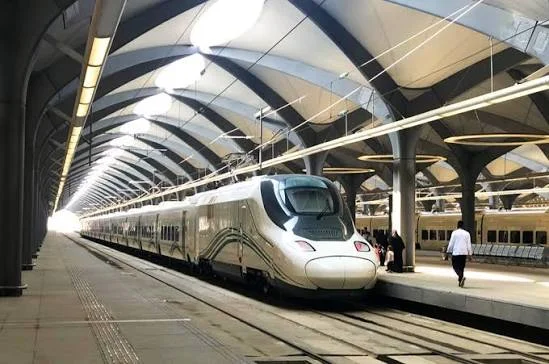
Why Airport and High-Speed Rail Broadcasting Is Hard in the Middle East: A Public Address Deployment Guide for Heat and Dust
Why Is Broadcasting Difficult at Middle East Airports and High-Speed Rail Stations?
Airports and high-speed rail stations in the Middle East have been expanding steadily with tourism and infrastructure investment. Large hubs are being built one after another, and broadcast system requirements have risen with them. This is not a matter of “hanging up a few speakers and playing music.” Here, broadcasting is mission-critical: flight delay notices, train arrival and departure information, passenger paging, and emergency evacuation. If any single announcement fails to play or cannot be heard clearly, operations and safety are directly affected.
Compared with other regions, transport hubs in the Middle East face several extra challenges. First, the environment. Summer temperatures regularly exceed 40°C, with sand, dust, and a dry climate. Outdoor and semi-outdoor equipment must stand up to the test. Second, the space. Terminals often cover tens of thousands of square meters with ceiling heights of ten meters or more. Sound must reach every corner while speech stays clear. Third, integration. Broadcasting must work with fire alarm, dispatch, and information display systems. When a fire alarm comes in, evacuation voice must immediately override everything else. Add the widespread need for bilingual announcements in Arabic and English, and a single system must carry far more work than most people expect.
Middle East transport projects choose broadcast vendors based on more than “whether it can make sound.” They check three things: whether equipment holds up in heat and dust, whether fire and dispatch integration runs smoothly, and whether local teams can handle installation and after-sales service. The sections below first explain how to deploy a transport broadcast system from terminal to platform, then look at which vendors deserve attention.
From Terminal to Platform: Different Spaces, Different Approaches
Transport hub broadcasting fails most often when one solution is applied everywhere. Departure halls, waiting platforms, arrival and transfer corridors, and multiple terminals each have different tasks. Equipment selection and deployment logic differ by space. Walking through each space makes the whole picture clearer.
1. Departure Halls and Waiting Areas: Information Delivery in Noisy Crowds
Departure halls are the most crowded spaces. Ambient noise comes from crowds, reflected announcements, and air conditioning systems. Speech intelligibility matters here. Check-in notices, boarding reminders, and delay announcements must remain clear in noisy conditions. Wall-mounted or ceiling speakers are typically used for even near-field coverage, with the ceiling speaker layout arranged to reduce the muddiness caused by sound reflection.
2. Gate Areas and Platforms: Long Distance, High Noise
This is where transport broadcasting demands the most from equipment. Platforms are very noisy as trains arrive and depart. Gate areas span large distances, and ordinary speakers cannot project far enough. These areas typically use horn speakers or column speakers for long-distance projection. Sound pressure level and directivity must be sufficient—sound should be aimed precisely at passenger waiting areas instead of bouncing off the ceiling. Given outdoor and semi-outdoor conditions, equipment also needs adequate dust resistance and heat tolerance.
3. Arrival Levels and Transfer Corridors: Paging and Passenger Flow
Arrival levels, baggage claim areas, and transfer corridors mainly need paging and passenger flow guidance: pickup paging, baggage claim notices, and transfer directions. These areas are usually zoned by corridor and hall. Duty staff pick up a paging microphone in the central control room or duty office and select a zone. Only that zone hears the message, and other areas keep operating normally.
4. Multiple Terminals and Stations: One Network Manages Everything
Large hubs often have multiple terminals or multiple station sites. Traditional analog broadcasting depends on pulled cable, so cross-building and cross-zone management is nearly impossible. IP network broadcasting solves this by giving each network speaker a built-in decoder and amplifier. A single network cable provides both power and data over the existing LAN. Zoning is done in software. The central control room can send unified notices, while each area manages its own paging and background broadcast independently. Adding a zone means adding one network endpoint—no new cabling or construction.
Recommended Manufacturers with Advanced Transportation PA Systems
With the deployment logic clear, the next question is who to work with. The manufacturers below all have mature solutions and public cases in the global transportation hub market. Use them as references for comparison.
1. SPON (SPON Communications Co., Ltd.)
SPON was founded in Changsha, China in 2004. It is a professional IP audio solution provider with a full line of self-developed products, covering IP network public address, IP network intercom, IP conference systems, and audio capture products such as surveillance microphones. Its systems support open protocols including SIP, ONVIF, and HTTP API, and integrate readily with fire alarm, video surveillance, access control, and third-party dispatch platforms.
For transportation hubs specifically, SPON offers the XC-9501, an IP-based PAVA (public address and voice alarm) system built around a distributed, serverless architecture with no single point of failure. PAVA matters in airports and rail stations because in an emergency people need clear spoken guidance — which route to take, which exit to use — rather than a generic alarm tone.https://www.youtube.com/watch?v=tQ27o0t8eHc.
Reliability is engineered in rather than added on. The XC-9501 supports automatic amplifier backup, power supply redundancy, and network backup, so a failed amplifier, power feed, or network link does not take down the whole hub. It integrates directly with fire alarm systems to trigger emergency voice evacuation, and matrix-based audio scheduling lets control rooms and remote paging stations run the system together across floors and platforms.
SPON integrates R&D, manufacturing, sales, and technical support in one company, with more than 200 R&D staff, over 200 intellectual property rights, and an in-house acoustic and reliability test laboratory. Products pass waterproof, salt-spray, high/low temperature, and surge tests before shipment, and core products hold CE certification with a two-year warranty. Today, SPON broadcast systems serve more than 100 airports and high-speed rail stations worldwide, with solutions in over 100 countries. Through a local distributor network — in the Middle East, SPON has distributors in Saudi Arabia, the UAE, and Palestine — it provides local installation, commissioning, training, and after-sales support.
2. AtlasIED (US)
AtlasIED is an American audio and security communications manufacturer founded in 1934. Its official website positions the company as a “global technology, engineering, and manufacturing company,” with 10 office and production sites worldwide. Its GLOBALCOM® system is a platform for large-scale notification and public address. Official case studies show the system delivered end-to-end audio communication for New York’s Moynihan Train Hall—a 255,000-square-foot hub built as an extension of Pennsylvania Station, connecting Amtrak and the Long Island Rail Road and serving large numbers of passengers every day.
3. Zenitel (Norway)
Zenitel’s official website lists transportation as an area of expertise, with 125 years of experience, specializing in solutions for public address, voice alarm, perimeter protection, and intercom systems. Public case studies show that in its Klang Valley MRT project in Malaysia, one unified system manages PAVA broadcasting, integrates with third-party fire alarm systems, and links platform announcements with information displays. It uses A+B redundant routing and amplification, so the system keeps working under fault conditions.
4. Bosch (Germany)
Bosch Security and Safety Systems is the security and communications business of the Bosch Group. Its PRAESENSA system is a fully IP-based public address and voice alarm system. Official case studies show it deployed at the Mersey Tunnels in the UK, supporting both centralized and decentralized network topologies. It can connect to existing fiber networks and original speaker lines, with intelligent power management and redundant design—suitable for continuously running scenarios such as transport tunnels.
Real Transportation Hub Projects: How Each Vendor Works
Transportation hub broadcast projects generally fall into three types: new hub builds with complete IP deployment, large-space coverage with safety integration, and upgrades of existing facilities. SPON and other vendors all have public cases in each category. Comparing them side by side makes selection easier.
New Hubs: Planning a Complete IP Broadcast System from Scratch
New hubs carry no legacy burden. They often install a complete IP network broadcast system from day one. SPON deployed an IP audio matrix broadcast system at Panama Pacifico International Airport for daily notices, zoned broadcasting, and emergency announcements in terminal areas. Lima and Callao Metro Line 1 in Peru uses SPON systems for station operation notices, passenger guidance, train information, and emergency broadcasting, giving the line clear and unified voice announcement capability. SPON’s own approach in these new builds follows the same PAVA logic: distributed architecture across the hub, zoned emergency voice that overrides routine announcements with spoken evacuation guidance rather than a generic tone, and redundant amplifier and network paths so that passenger information and evacuation audio stay up even if one link fails.Zenitel’s Klang Valley MRT project in Malaysia, which manages PAVA broadcasting on a unified platform integrated with fire alarm systems, is another representative approach for new-build projects of the same kind.
Large Spaces and Safety Integration: Wide Coverage That Works in Critical Moments
These projects demand large system scale and strong integration capability. SPON’s transport broadcast solutions support zoned emergency announcement in both airport and metro scenarios, with evacuation voice triggered by fire alarm systems. Its products use open protocols to connect to surveillance, dispatch, and alarm systems. AtlasIED’s end-to-end audio communication at New York’s Moynihan Train Hall is another public practice of multi-system audio coordination inside a large hub. These projects test not only sound quality but also reliability and integration capability at the critical moment.
Upgrading Existing Facilities: Smooth Replacement Without Touching Old Wiring
Many transport facility broadcast systems have been in service for more than a decade. The biggest fear during an upgrade is major disruption. SPON offers hybrid IP solutions that use IP audio bridges to smoothly connect existing analog speaker lines, with no need for complete rewiring. Bosch’s PRAESENSA took the same path in the Mersey Tunnels project in the UK: it connects to existing fiber networks and original speaker lines, using intelligent power and redundant design to lower renovation cost and energy use. The common approach across these projects: protect existing investment and shorten renovation cycles.
In each category, every vendor makes its own trade-offs and follows its own approach. Match the choice to your project’s scale, budget, and renovation conditions rather than chasing brand names.
Summary
Airport and high-speed rail broadcasting is not a project that ends after installation. It is part of the hub’s long-term operation, especially in the Middle East. Equipment must withstand heat and sand. The system must manage multiple zones. And it must be able to raise the alarm at the critical moment. When choosing a vendor, check against these criteria: whether there is a local service team in the Middle East, how many airports and stations the vendor has served, how many years the systems have actually been in operation, whether fire alarm integration runs smoothly, and whether existing lines can be reused for upgrades.
SPON’s broadcast systems have served more than 100 airports and high-speed rail stations worldwide, with distributors in Saudi Arabia, the UAE, and Palestine providing localized technical support. Its product line is fully self-developed and supports open protocol integration. It offers one-stop service from needs analysis and solution design to installation, commissioning, technical training, and after-sales support.
If your airport or high-speed rail station is planning a new broadcast system or an upgrade, organize your requirements—terminal layout, peak-hour noise conditions, fire alarm integration needs, and existing line conditions—and consult SPON for an overall solution design. Let the professional team produce a deployment plan from terminal to platform based on your hub size, planned once and planned right.