The Rise of the Social Kitchen: Why
Open-Concept Layouts Still Dominate in 2026
The open kitchen was supposed to be a passing trend.
Design commentators have been predicting its decline for years now. “The open floor plan is dead,” they say, usually around the same time they declare that some other era’s aesthetic is making a comeback. But walk through any recently renovated home in a city like San Francisco and the evidence tells a different story. Open-concept kitchens are not just surviving. They are evolving.
In 2026, the open kitchen has matured into what designers are calling the “social kitchen.” It is a space built around the idea that cooking and gathering are not separate activities. They happen at the same time, in the same room, and the kitchen needs to support both.
How We Got Here
The open kitchen gained popularity for practical reasons. American homes built before the 1980s typically featured closed-off kitchens, separated from living and dining areas by walls and doorways. As family life shifted and kitchens became social hubs, homeowners started tearing down those walls.
The pandemic accelerated the trend. With everyone home all day, the kitchen became a shared workspace, classroom, and gathering point. The walls that once defined a kitchen felt less like architectural features and more like barriers keeping family members apart.
In San Francisco’s Sunset District, where many homes were built in the 1930s through 1960s with compartmentalized floor plans, opening up the kitchen to adjacent rooms has become one of the most requested renovations. A kitchen remodel in the Sunset District that removes a wall between the kitchen and dining room can make the entire ground floor feel twice as large, even though not a single square foot has been added.
The Social Kitchen Is More Intentional
What distinguishes the 2026 social kitchen from the open floor plans of ten years ago is intentionality. Early open-concept renovations often just removed walls and left it at that. The result was one big room with no clear zones, where cooking noise competed with conversation and clutter was visible from every angle.
Today’s approach is more nuanced.
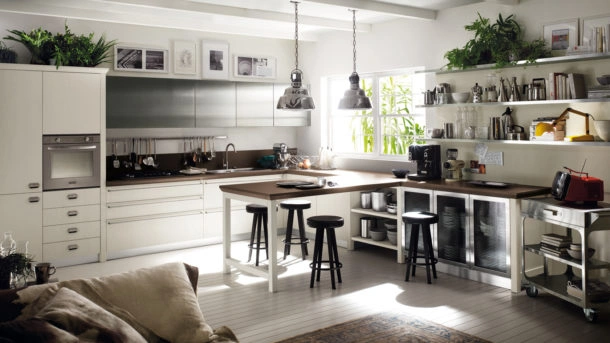
Designers are using kitchen islands, changes in flooring material, pendant lighting, and even subtle shifts in ceiling height to create visual boundaries within an open space. The kitchen area is clearly defined, but it flows naturally into the living and dining areas. You can cook and still be part of the conversation. You can supervise homework from the stove. But the space does not feel like one undifferentiated box.
The Island as Social Anchor
The kitchen island has become the single most important piece in the social kitchen. It is the element that bridges cooking and gathering.
On one side, it is a functional workspace with a sink, prep surface, or cooktop. On the other, it is a bar where family members sit, where guests lean while you cook, where kids do homework while you start dinner. This dual function is why islands are getting bigger. Half of renovated islands now exceed seven feet in length, according to the Houzz 2026 Kitchen Trends Study.
The best social kitchen islands are designed with this dual life in mind. A slightly raised countertop on the seating side hides the prep mess from view. Integrated power outlets let people charge devices. Pendant lights above the island create a warm focal point that draws people in.
Managing Noise and Mess
The biggest complaints about open kitchens have always been noise and visibility of clutter. Nobody wants their guests staring at a sink full of dishes.
2026 kitchens are addressing this with several clever strategies. Quieter appliances are a priority. Modern dishwashers are virtually silent. Range hoods with variable speed controls can run on a low, quiet setting during conversation and ramp up only when heavy cooking produces more steam and smoke.
For visual clutter, the trend toward handleless cabinets, integrated appliances (like panel-ready dishwashers and refrigerators that blend into the cabinetry), and clean countertop design helps keep the kitchen looking tidy even when it is in full use. Walk-in pantries and butler’s pantries, where available, serve as a backstage area where the mess can hide.
When Open Is Not the Right Choice
It is worth noting that open concept is not right for every home or every homeowner.
Serious home cooks who generate a lot of smoke, steam, and strong aromas may prefer a more enclosed kitchen with a powerful ventilation system. Some people simply prefer the visual and acoustic separation of defined rooms. In older homes, particularly those with load-bearing walls, the cost and complexity of opening up the kitchen can be prohibitive.
The point is not that everyone should have an open kitchen. It is that the social kitchen concept works for the way most modern families live, and it continues to be the dominant approach to kitchen design because it solves real problems.
The Kitchen That Brings People Together
At its core, the social kitchen is about connection. It is designed around the understanding that the best conversations happen in the kitchen. That kids feel more connected to their parents when they can be in the same room, even if everyone is doing something different. That hosting a dinner party is more fun when the cook is not isolated behind a wall.
The specifics of how you achieve that, whether through a full wall removal, a half-wall pass-through, or a widened doorway, depend on your home and your budget. But the underlying principle remains the most powerful trend in kitchen design: build a space that brings people together.
Disclaimer:
The information provided in this article is for general informational and educational purposes only. Design trends, renovation practices, and cost estimates may vary based on location, property type, and individual preferences. This content does not constitute professional architectural, construction, or financial advice. Readers should consult with qualified architects, contractors, or design professionals before making any structural changes or renovation decisions. References to specific locations or studies are for illustrative purposes only and do not guarantee similar results.