Multidimensional Media Is Changing Creator Workflows
Creators are asked for more than a video anymore. A single concept now needs to live as a clip, a podcast segment, a carousel, and something clickable.
This is what multidimensional media describes: content that spans formats such as video, audio, 3D assets, and interactive elements, produced in parallel or reshaped for channels.
Traditional publishing rewarded specialization. Video creators focused on shooting and editing, designers handled stills, and developers built experiences, each with its own timelines, files, and handoffs.
Now those borders blur inside the content creation workflow. A project might start as a script, then branch into narration, captions, motion graphics, interactive polls, and a 3D model. Tools that convert between formats, such as image to 3D converters, make these transitions faster than manual rebuilds.
Generative AI helps creators translate ideas between media, turning prompts into drafts, images into animations, and rough audio into cleaner takes. These AI tools speed up repurposing without repeating tasks.
As a result, AI is no longer experimental for many teams. Digiday has reported that over 80 percent of content creators are using AI somewhere in production, especially around video and design tasks.
Understanding the term matters because it changes how work gets planned, stored, reviewed, and shipped. The next step is seeing how workflows adapt when one idea must serve many outputs.
How Creative Workflows Are Evolving
The shift toward multidimensional media touches nearly every stage of production. Two changes stand out: how teams sequence their work and how they stay connected while doing it.
From Linear Production to Parallel Creation
Traditional media workflows often moved in a straight line: a script became a shoot, the edit arrived later, and only then did teams pull stills, audio, and social cutdowns.
In multidimensional projects, however, creators plan outputs together. Video timelines, podcast narration, thumbnail concepts, and motion graphics can all advance at once, guided by one brief and shared source files.
This parallel approach changes scheduling. Instead of waiting for “picture lock,” teams define checkpoints for each format, so assets stay consistent while different versions mature at different speeds.
Producers also think earlier about metadata, naming, and storage, since one recording may feed many derivatives and approvals in the same workspace.
Automation and Real-Time Collaboration
As complexity rises, automation absorbs repetitive work that used to clog calendars. Common automated steps include format conversion and proxy creation, transcription and caption drafts, and loudness normalization and basic trims.
Automation does not remove editorial judgment, but it reduces the number of manual handoffs that slow review cycles.
Real-time collaboration then keeps those cycles tight across locations. Review platforms such as Frame.io let editors, producers, and stakeholders comment directly on frames, track versions, and resolve feedback without long email threads.
Connected ecosystems matter, too. When Frame.io integrates with Adobe apps, teams can move between review notes and edits with less file wrangling, making creative workflows easier to coordinate for distributed, multi-format teams.
Scaling Content Without Sacrificing Quality
Content scaling often starts as a volume problem, but in multidimensional media it is also a structure problem. When teams treat each format as a separate project, timelines multiply and quality slips.
A shared source package keeps every output tied to the same script, visuals, and approvals. One recording session can yield a full video, short clips, and an audio cut when teams plan repurposing early.
This reduces repeated content production work around voice, captions, and graphics. Standardized capture across contributors, including checks with browser-based recording tools, limits technical surprises.
Localization scales the same idea to new regions and languages without rebuilding the core. Teams adapt scripts, captions, and on-screen text while keeping timing, imagery, and terminology consistent. A shared glossary reduces tone drift.
AI tools can speed variant creation, but they work best when rules are explicit. Adobe Firefly, for example, can generate image options that match existing design patterns in a template.
Editors still select, revise, and reject outputs, so automation supports consistency rather than replacing judgment. Clear prompts, locked brand elements, and documented do-not-use rules reduce rework.
Quality control gets harder as versions proliferate across formats, languages, and aspect ratios. Teams usually add checkpoints at each handoff that catch drift before it reaches every channel. These checkpoints typically include source-of-truth shared assets and clear naming, per-format review criteria, and final approvals tracked by version.
Challenges Unique to Multidimensional Workflows
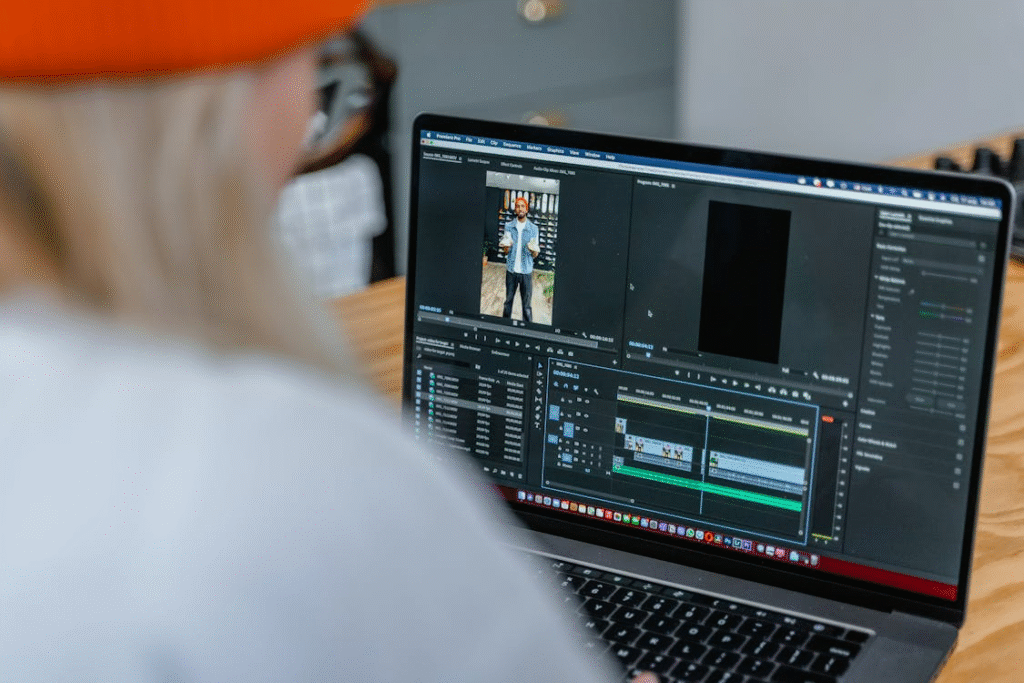
Multidimensional projects add coordination overhead that traditional creative workflows rarely face. Video edits, audio mixes, 3D renders, and interactive states must align, so one change can ripple across deliverables.
Media workflows become harder to read when teams run in parallel and dependencies cross formats. Without shared briefs, naming standards, and review checkpoints, small inconsistencies can quietly spread from draft assets into final exports.
Version control also gets messy because files behave differently across tools. A timeline, sound library, shader, and JSON config can reference other assets, so the “latest” folder does not always mean the right build.
Approval trails can fracture when stakeholders comment in separate places, such as on frames, audio timecodes, or prototype links. Teams often need a record of decisions to avoid reopening settled edits during late-stage polish.
Skill gaps show up quickly, especially for creators trained in only one medium. Multimodal AI can translate assets and generate first drafts, but someone still has to judge loudness, aspect ratios, interactivity, and 3D limits.
Tool fragmentation adds another layer, since switching among NLEs, DAWs, 3D suites, and interaction frameworks forces context changes. Discussions of music app development innovations echo this learning curve, which rewards documentation, templates, and practice.
Who’s Adopting Multidimensional Workflows—and Why
Adoption is not evenly distributed across creator types. In many creator surveys and platform reports, video creators tend to post the highest rates of AI experimentation, partly because editing already involves repeatable steps like captions, cutdowns, and thumbnails where AI tools fit naturally.
Another pattern involves age and tenure. Findings in creator research often show that older, more experienced creators report higher use of generative AI than newcomers, even when both groups have access to the same apps. Familiarity with production constraints makes it easier to judge where automation helps and where it introduces risk.
Experience also changes how comfortable people feel running multi-format tracks at once. Veterans usually have a mental model for how a script, a timeline, and a distribution plan connect, so they can use ChatGPT for outlining, then route outputs into audio, short-form, and still assets without losing cohesion.
Established creators also face stronger efficiency pressure: larger backlogs and publishing calendars, more stakeholders and approvals, and clearer baseline quality to protect. That combination makes time-saving workflows feel like maintenance, not experimentation, for many teams.
Where Multidimensional Media Workflows Are Heading
Multidimensional media reflects how audiences now consume ideas in fragments, feeds, and formats that shift by device and moment. One concept may need to travel as video, audio, stills, and interactive elements, so teams design outputs together rather than in a single line.
In that environment, generative AI fits best as infrastructure inside creative workflows, handling drafts, variants, and routine transforms between mediums. Editors, designers, and producers still set intent, tone, and taste, and they remain responsible for accuracy, rights, and final decisions.
To stay aligned, creators can compare their content creation workflow to the demands discussed earlier: parallel planning, shared source assets, clear versioning, and review trails that travel with files. Small audits often reveal where handoffs break, where metadata is missing, or where automation could reduce repetition.
Adaptation usually looks like clearer briefs, tighter checkpoints, and ongoing skill building, so complexity stays manageable as channels keep multiplying.