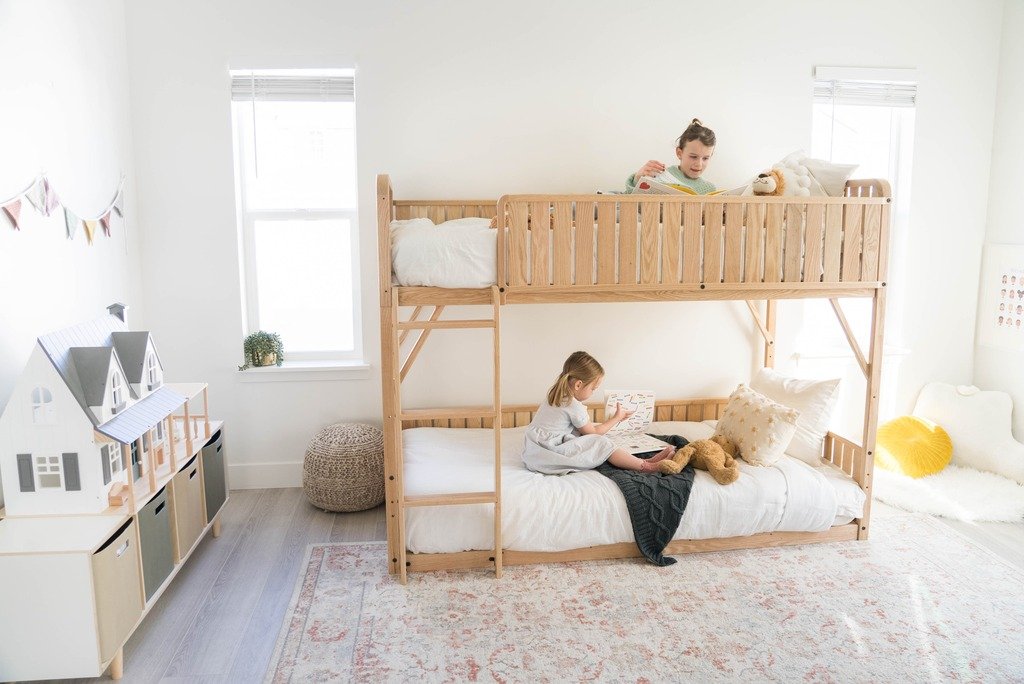
Bunk Beds for Kids’ Shared Rooms: A Smart Solution for Siblings
When siblings share a bedroom, space can quickly become limited. Toys, books, and clothes often pile up, making it hard to keep the room organized. Bunk beds for kids’ shared rooms are a practical solution. They save space, provide storage options, and create a fun sleeping arrangement for children.
In this article, we’ll explore why bunk beds are perfect for shared rooms, the types available, safety tips, and how to organize a room so siblings can live comfortably together.
Why Bunk Beds Work for Shared Rooms
Bunk beds are an excellent choice when two or more children share a bedroom:
- Maximize space: Two beds in the space of one frees up room for play, study, or storage.
- Provide personal space: Each child gets their own sleeping area, which reduces conflicts.
- Add storage: Many bunk beds include drawers, shelves, or cubbies to keep the room organized.
- Fun design: Kids enjoy climbing the ladder and sleeping on the top bunk, making bedtime more exciting.
With bunk beds for kids’ shared rooms, small spaces can feel comfortable and functional.
Popular Types of Bunk Beds for Shared Rooms
Depending on your children’s ages and room layout, there are several practical designs:
Classic Bunk Bed
The standard stacked design is perfect for siblings who share a room. It’s simple, sturdy, and saves floor space.
Loft-Style Bunk Bed
Raising the top bunk creates space underneath for a desk, play area, or extra storage. Loft-style designs are ideal for older children who need a study space.
L-Shaped or Corner Bunk Bed
These beds fit into a corner, maximizing the available floor area. Many L-shaped designs also include drawers or shelves for storage.
Low Bunk Beds
For younger children, low bunk beds reduce the risk of falls while still offering storage underneath. These designs are safe and practical.
Safety Tips for Shared Room Bunk Beds
Safety is essential in a shared bedroom:
- Guardrails: Make sure top bunks have rails on all sides.
- Secure ladders: Ladders should be wide, stable, and easy to climb.
- Weight limits: Follow manufacturer recommendations.
- Mattress fit: Mattresses should fit snugly to prevent gaps.
- Regular checks: Inspect the bed frame and fastenings periodically.
Choosing bunk beds for kids’ shared rooms that meet safety standards ensures children can sleep and play safely.
Organizing a Shared Room
Bunk beds make shared rooms easier to manage if paired with good organization:
- Individual storage: Assign each child their own drawers or shelves for clothes and toys.
- Declutter regularly: Encourage children to tidy up daily to keep the room comfortable.
- Create personal zones: Add curtains, small partitions, or color-coded storage to give each child a sense of ownership.
- Use under-bed space: Extra boxes, baskets, or bins under the bed can store seasonal items or extra toys.
These strategies help siblings coexist peacefully and enjoy their shared space.
Creative Ideas for Shared Bedrooms
Bunk beds don’t just save space—they can also make the room fun:
- Reading or play nook: The area under the top bunk can become a cozy corner for reading or playing.
- Theme the room: Beds shaped like castles, ships, or forts make shared bedrooms exciting.
- Study area: Loft-style bunk beds can incorporate desks for homework and crafts.
- Personalized storage: Label drawers or shelves to make organization simple and fun.
With the right design, bunk beds for kids’ shared rooms can transform a small bedroom into a functional, organized, and enjoyable space.
Conclusion
Bunk beds for kids’ shared rooms are a practical solution for families with limited bedroom space. They save room, provide storage, and create a safe and fun sleeping area for children.
For families looking to make the most of a shared space, explore bunk beds for kids’ shared rooms to find designs that combine style, functionality, and safety.
Disclaimer
The information provided in this article is for general informational purposes only. While we aim to share helpful tips and ideas about bunk beds for kids’ shared rooms, the content should not be considered professional advice. Safety recommendations may vary depending on the specific bunk bed model, manufacturer guidelines, and the age of the children using it. Parents and guardians should always follow the manufacturer’s instructions and safety standards when purchasing, assembling, or using bunk beds. The author and publisher are not responsible for any injuries, damages, or losses that may occur from the use of the information provided in this article.